
The Diamond Age - Part 1
Reflections from the past

In a casual chat in LA, someone fired off,
“What’s the top fictional book that screams ‘curiosity’ to you?”
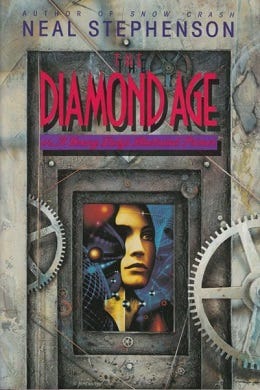
Without missing a beat, Neal Stephenson's "The Diamond Age" flashed in my mind.
====
I first read "The Diamond Age" when I was in my mid-20s and hustling at a startup. If you've read Stephenson's "Snow Crash" (a must-read), you'll understand his genius. However, his endings tend to be lackluster, as if he's rushing to meet a deadline or just giving up. Hey, Stephenson, maybe you should consider writing TV scripts instead - endless cliffhangers without the need for season wrap-ups?
I've often thought there should be writing contests for AI-assisted alternate endings to all of Neal's books, resulting in the ultimate choose-your-own-adventure series.
In the book's first chapter, a punk criminal named Bud is very unpleasant and irritating. He is so off-putting that I almost burned the book in my fireplace. However, my partner Scott, who is more patient than I am, revealed a significant plot twist: Bud dies in the first act and is never seen again. Scott's spoiler turned out to be valuable information for us.
Bud's only relevance is his, well, reproductive contribution. So, a tip: don't let that “skull gun” wielding moron deter you, which is a stupid idea anyway. Who puts a fucking gun inside their head? Skim through his debut and ending, then pay attention….
The audiobook is not great. Honestly, I feel it is a better read, so you can add your imagination to it, as the person who narrates the book is super bad at accents and not that interesting to listen to.
SPOILERS THAT COUNT AHEAD:
====
The novel Diamond Age, by Neal Stephenson, is set in a future where nanotechnology is ubiquitous and has permeated all aspects of life. In this world, traditional nation-states have been replaced by tribal cultures called phyles. These phyles are groups of people who share common values, beliefs, and practices. They are connected through a network of communication and trade, and they function as self-sufficient entities within a larger global economy.
The idea of network states proposes that conventional nation-states might be replaced by decentralized networks of people connected through technology. These networks could be formed around shared values, interests, goals, and even geographical boundaries, although some may exist without any of those.
Overall, the Diamond Age presents an intriguing view of a future where technology and culture have evolved in unexpected ways and where the traditional structures of society have been replaced by new, more fluid forms of organization.
Nell, a small but brave protagonist, starts at the bottom in a world where even a speck of dust has programming code. Her older brother Harv, who is also the son of Bud (who is now dead), steals from a "Viccy" - a derogatory term for a Neo-Victorian, the most successful tribe on this version of Earth. However, he is disappointed to find that the person only has what seems to be a regular old book. Harv cannot read and has no interest in it, so he gives the book to Nell, who spends most of her time at home. Their mother, Tequila, has a rough life, and she rotates through abusive lovers who take turns beating the kids.
Nell’s book is called "A Young Lady's Illustrated Primer", also known as "The Primer". This book is not ordinary, as it incorporates advanced technology that makes it appear magical. It is designed to bond with the first girl who opens it, which happens to be her. Once bonded, it will not reveal any of its magic to anyone else, as its content is highly customized and adapts to the reader. Like Harry Potter, the pages in the book come to life, and the pictures move.
Let's take a moment to imagine the year this book was written - 1995. It was a turning point in consumer technology, with the landscape evolving and laying the foundation for the digital age we take for granted today. Back then, the technology available was limited compared to now.
It's fascinating to think about how far personal computers have come since their early days. In the mid-1990s, PCs were becoming more commonplace in homes, with the likes of Windows 95 making its debut. This operating system was a significant leap forward, introducing features like the Start menu (which we take for granted now!) and making the user interface more intuitive.
PCs:
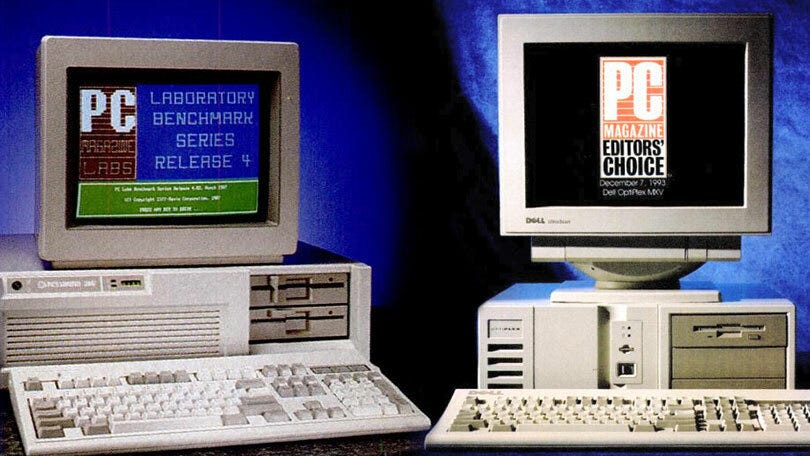
In those days, PCs came in bulky boxes, and laptops were costly. It's hard to imagine lugging around a computer like that today, but some people did just that back then. I remember attending Defcon in 1996 and seeing scrawny 90 lb kids carrying these laptops into the casinos, looking like they might topple over at any moment.
Browsers:
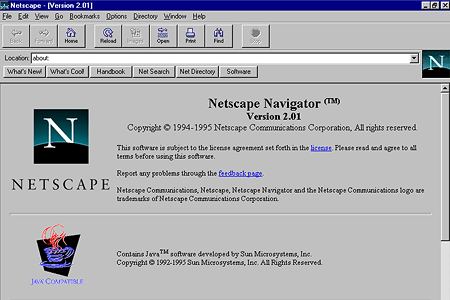
1995 was a pivotal year for the internet. Netscape went public only 16 months after it was formed. Their Navigator browser helped make the World Wide Web more accessible to everyday users. The year also marked the commercialization of the internet, shifting away from its academic and military roots. Before this, you could browse the Internet with Lynx, a text-based browser with no GUI or images.
I was such a massive fan of Netscape. OMG. It was a game-changer. Suddenly, the internet was more than just text on a screen. Now, we had images, and we had buttons, we had… *gasp* hyperlinks! It was like we lived in the Stone Age, and Netscape just invented the wheel.
Dial-up Internet Access:
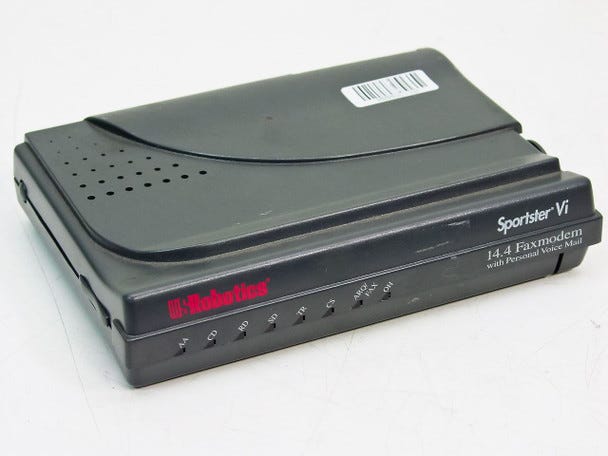
The sound of a modem connecting to dial-up may seem like a distant memory now, but it was music to our ears back in the day. It was the primary ,internet access method, and many companies offered their services through dial-up.
Believe it or not, my first technical job was supporting dial-up accounts over the phone. Let me tell you, it was no walk in the park. Most of our customers were non-technical and had no idea what they were doing. I spent countless hours on the phone trying to explain how to connect to the internet, how to troubleshoot their connection, and how to set up their email.
But despite the challenges, I have to admit, there was something special about those early days of the internet. Broadband was just a distant dream for most, and we were all just happy to be able to connect to the World Wide Web and explore its vast possibilities. Looking back, I can't help but feel a sense of nostalgia for those simpler times.
Keep in mind that the noise that sounds like cosmic static and intergalactic beeps wasn’t hidden from the consumer. This is exactly what you *heard* and reached a satisfying conclusion when you eventually connected successfully to the receiving modem bank at your Internet Service Provider.
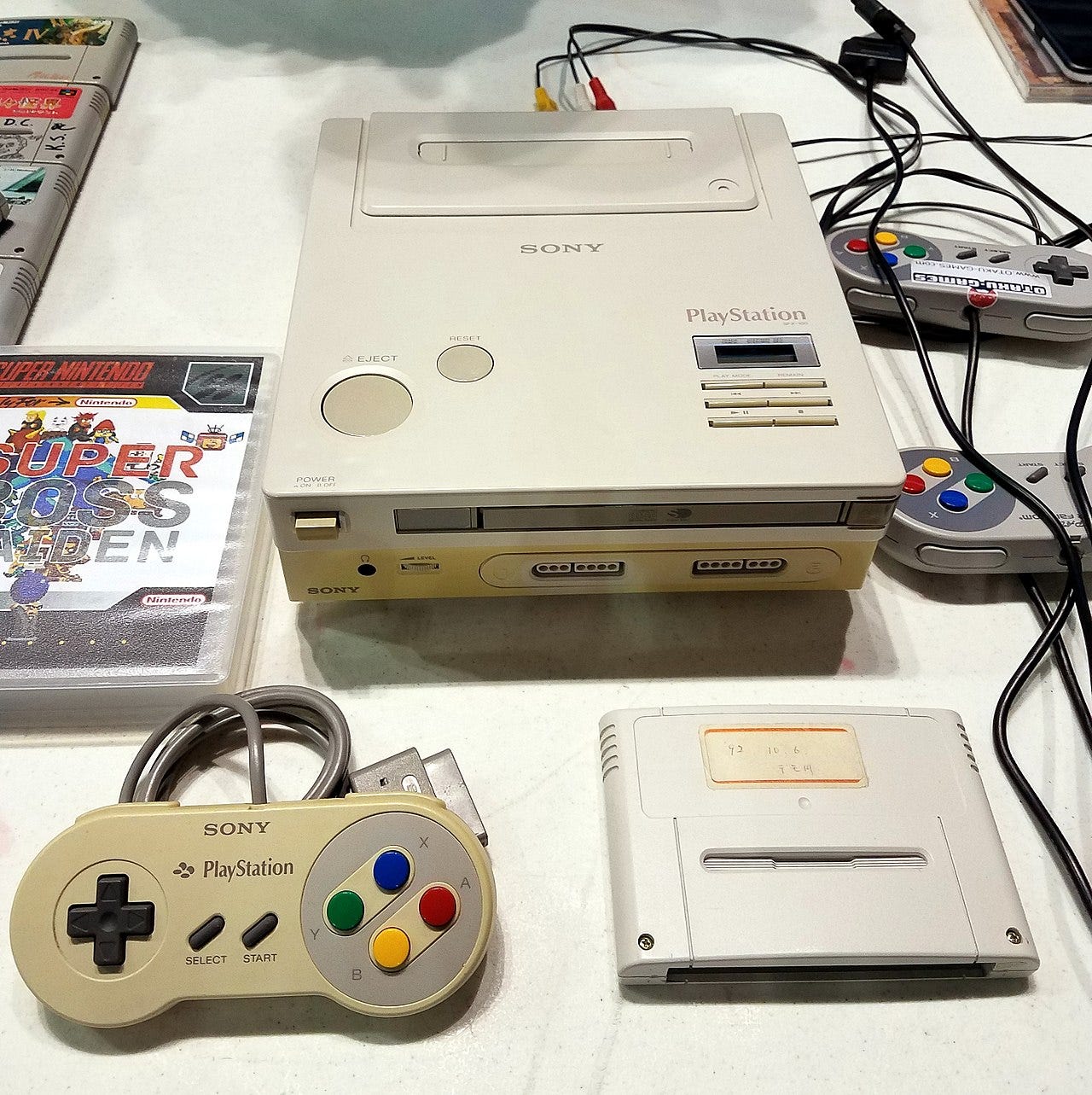
Video Game Consoles:
The Sony PlayStation debuted in the Western market, heralding a new era in gaming. Along with Sony, Sega's Saturn was also competing, while Nintendo continued to dominate with its Super Nintendo Entertainment System (SNES), with the impending release of the Nintendo 64.
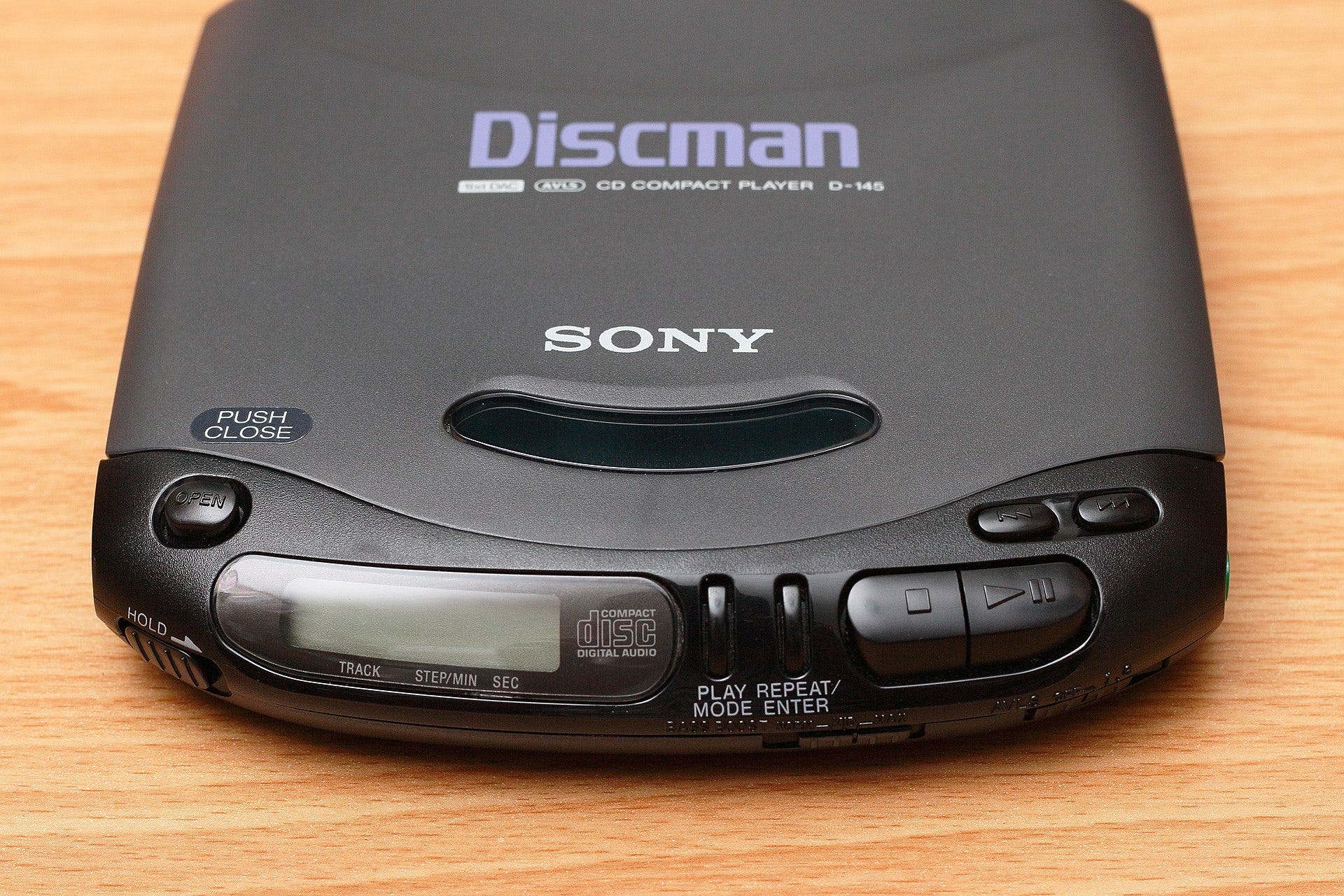
Portable Music:
The Sony Discman was a popular device for those transitioning from cassette tapes to CDs. At the same time, MiniDiscs were introduced to make their mark, but they didn't gain much global recognition. MP3s were invented in the 1980s, but it wasn't until the late 1990s that consumers began adopting them. This book takes us back to when people used to walk around with large hardware as a fashion statement. Can you guess which was the first MP3 song to be made available to consumers? You might win a prize if you leave your answer in the comments. I always enjoy doing this. Please let me know if you found my post interesting or not.
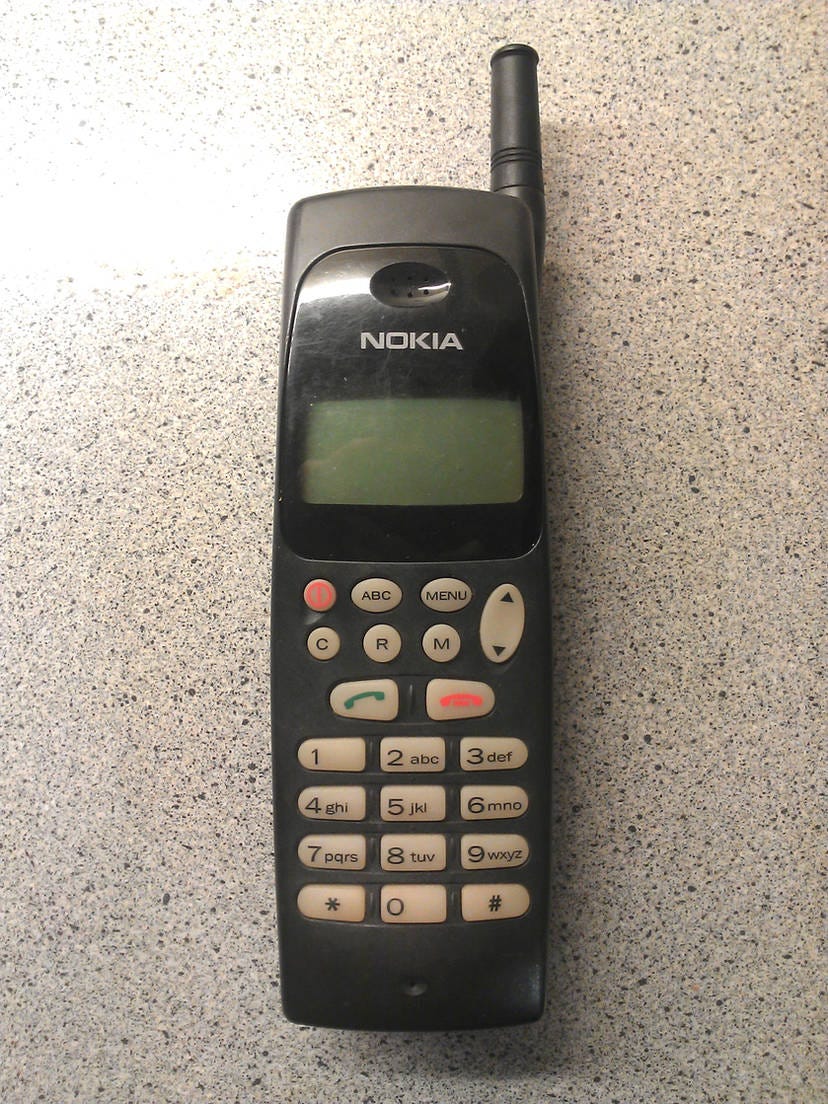
Cell Phones:
They were still essentially bricks in 1995. Nokia, Motorola, and Ericsson were dominant players. The devices were primarily for phone calls. Look at how sexy this is. So sexy. Eventually, when texting did become available, you still had to use the keypads to pick through letters, so the amount of texting you did was painfully time-consuming and, therefore, short.
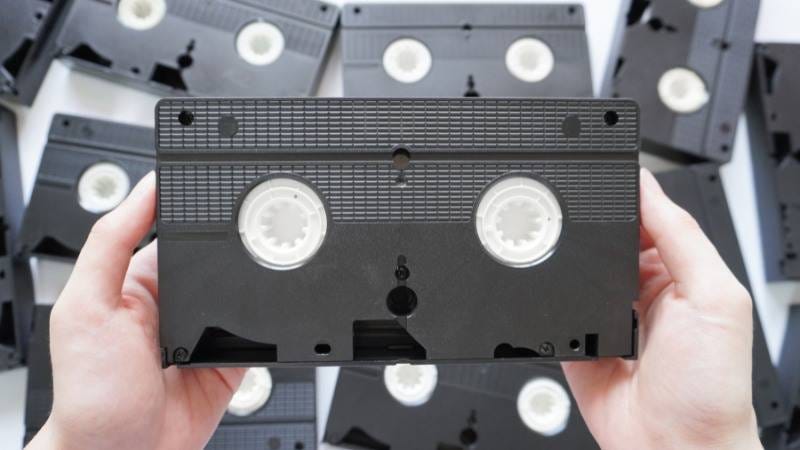
Home Entertainment:
VHS was the dominant format, but laserdisc and then DVD technology were introduced, promising better quality and heralding the slow decline of the VHS tape.
Digital Cameras:
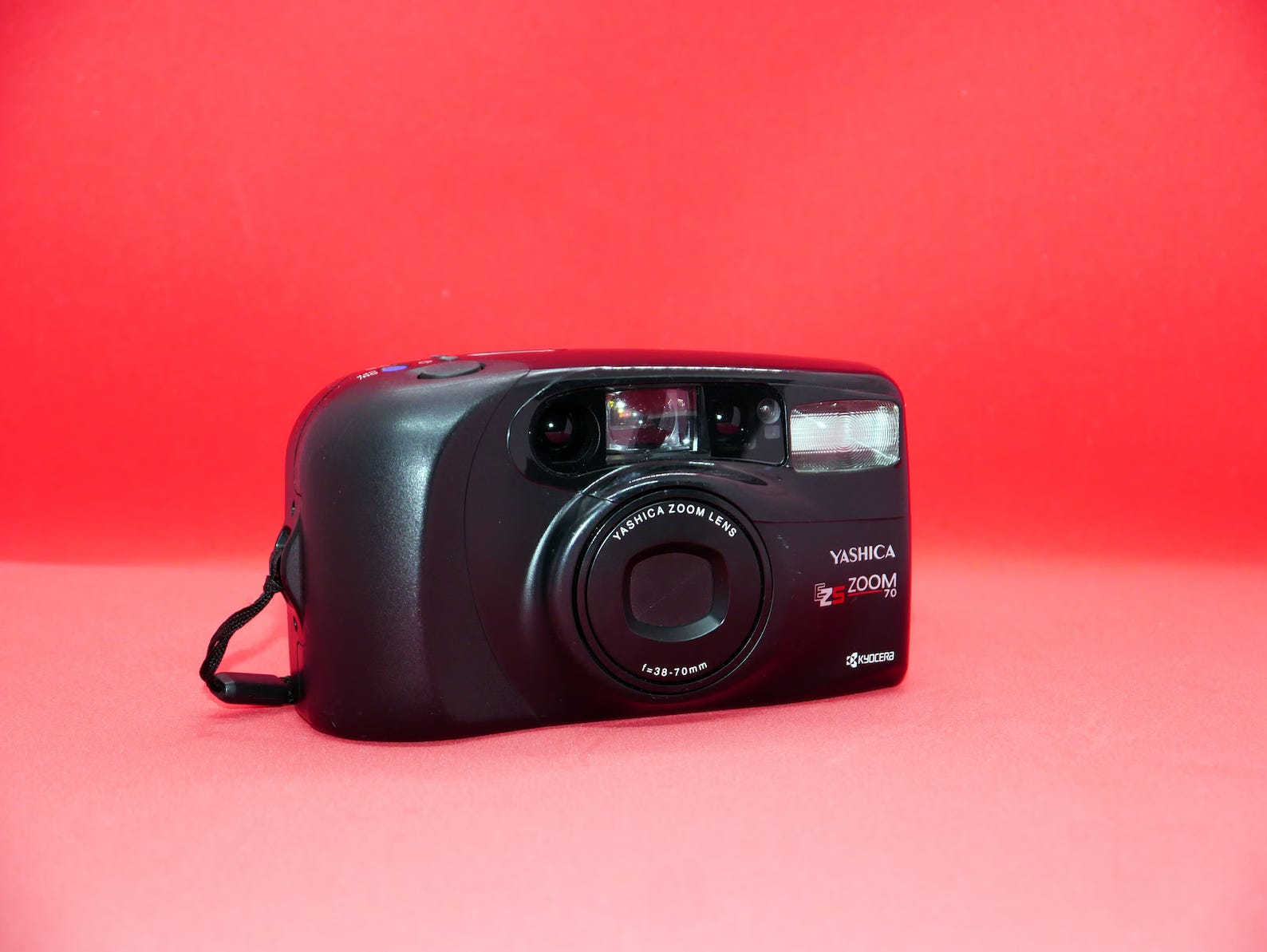
The mid-90s saw the introduction of consumer-friendly digital cameras, though they were expensive and not yet a threat to film. Interestingly, small handheld cameras haven’t changed much in form/size. Most photography these days originates from phones carried by each person, relegating the single-purpose camera device to hardcore hobbyists, enthusiasts, and professionals.
Early Virtual Reality:
Virtual Reality technology first attempted to enter the mainstream market in the 1990s. However, it was still in its early stages and didn't receive wide acceptance. Nintendo made one such attempt with its Virtual Boy, which was unsuccessful. The graphics were basic, with only black and red colors, making the visuals look rudimentary. However, it is worth noting that one cannot fully appreciate how ridiculous it looks without seeing it in person. So, if you ever feel bored and want to have a good laugh, you can search for images of the Virtual Boy to see for yourself.

Software:
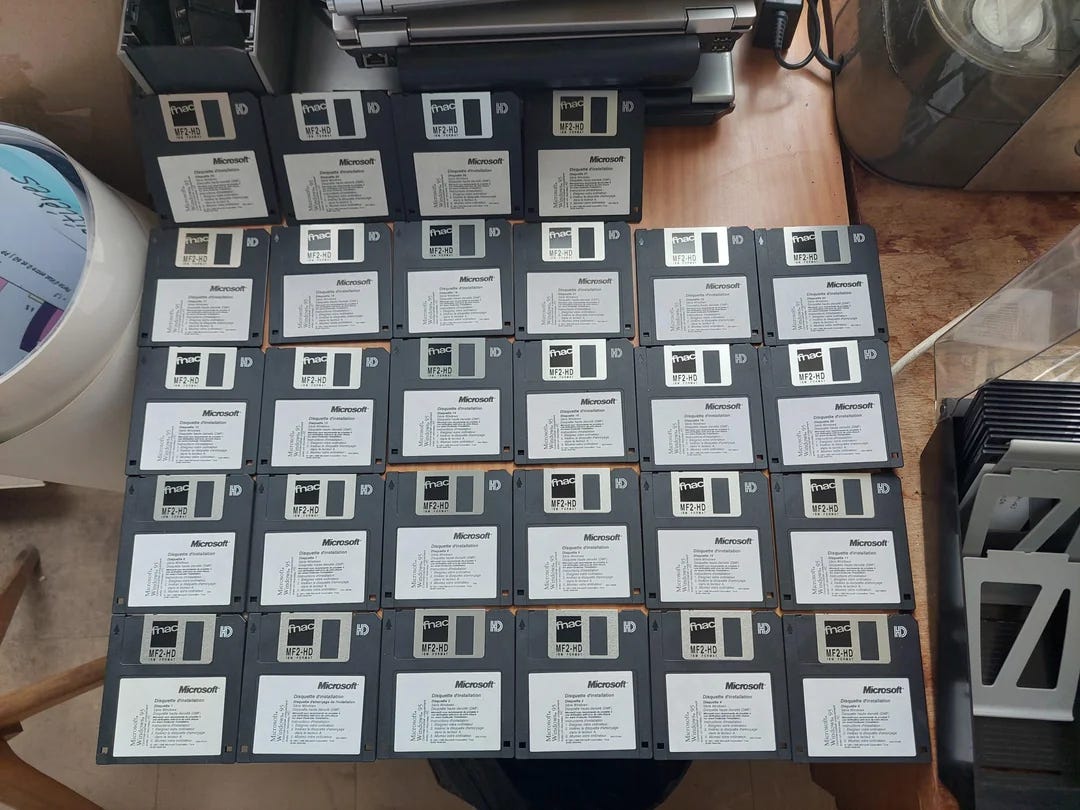
Besides Windows 95, other notable software releases included Internet Explorer and Java. The concept of an "app," as we know it today, was still a decade away. Windows 95 had **27** install discs. Forget apps; you had to binge-watch TV live with commercials and switch between channels because DVRs were not a thing.
Online Services:
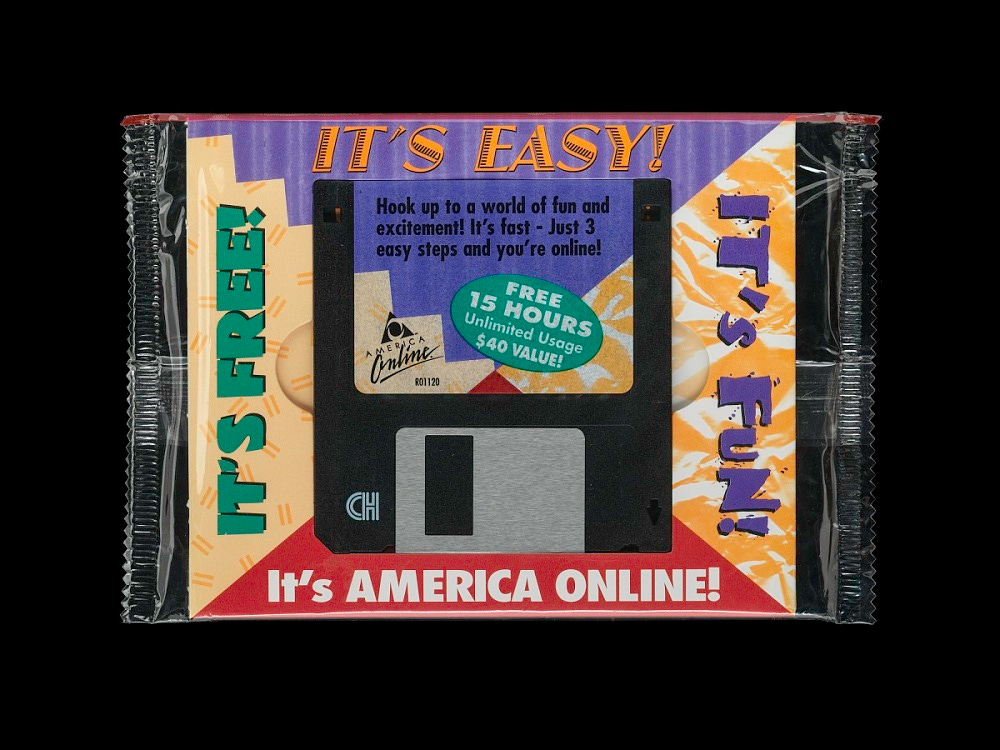
Beyond just browsing the web, people started flocking to online services like AOL (which provided its content ecosystem) and early versions of instant messaging. AOL’s distribution strategy was to bomb people with free installation disks via snail mail. Yes, it's a physical thing. There was a time when you would walk around neighborhoods and find AOL discs as litter; they were that prolific. At one point, I thought about making art with them, as I accumulated 100s of them on floppies and, shortly after, CDs.
The mid-90s acted as a connection between our analog past and our present digital age. With his remarkable foresight, Stephenson had already envisioned a world intertwined with advanced technology long before it became a reality. He authored some of the most significant tech love stories and was considered the Nostradamus of the decade. At that time, iPods and MP3s had not yet been invented, but he was already dreaming of an iPad that could interact with artificial intelligence. We are still, almost three decades later, catching up with his futuristic vision. It is daunting to ponder how much of today's technology was born from his ideas and how his work has influenced others.
The tech of that time might seem quaint by today's standards, but it was revolutionary for its time, sowing the seeds for the hyper-connected, sleek, gadget-laden world we live in today. Enthusiasm for technology during this period was at an all-time high, and the early pioneers were wild-eyed and manic with the spark of possibility.
Central to ‘The Diamond Age’ is the concept of “ractives”, digital AI-created narratives powered by real live human actors, blurring the lines between virtual reality and reality. This exploration of human connections in a digital realm mirrors early tech community interactions on platforms like IRC. Ractives ran on all sorts of devices, not just this book, and were sent to various agencies who bid on the jobs and then assign them to individuals who would play out the roles. As you can imagine, a lot of this was geared towards adult entertainment, but a whole sector focused on children and their education.
Many early 90s tech professionals hung out on IRC, BBSs, news groups, and mailing lists, which is where the concept of virtual friendships began. There were many questions about whether these friendships were real, and this question lives on, asked by parents everywhere about their children’s friendships in Discord and MMOs. Nell was assigned a ractor named Miranda, who slowly, over time, opted into job after job so she could raise Nell. As a result, genuine love between them formed, even though their interactions were anonymous. Love appears in many, many forms. In this book, the feelings are so real that Miranda and Nell are drawn to each other through a bond forged with the AI-generated passages of a book.
Why is "The Diamond Age" still relevant today? While we've made advances with LLMs and AI-driven applications, we haven't yet realized the full potential of nanotechnology. For instance, we're on the cusp of creating something as sophisticated as the Primer, but the transformative matter compilers from Stephenson's world remain out of reach. These devices, conceptually similar to hyper-advanced 3D printers, can assemble objects at a molecular or atomic scale using blueprints and raw materials. It's like envisioning a "Star Trek" replicator for every conceivable object, and as you can imagine, this breakthrough reshapes society, overhauling production, consumption, and economic paradigms.
A significant hurdle to achieving this future is the cost of raw materials, especially diamonds. In the book, the cost of diamonds had to plummet drastically for matter compilers to be viable. Like, to near zero. Today, there are companies like Diamond Foundry (full disclosure, we are investors). They're pioneering lab-made diamonds, which could dramatically reduce prices and increase availability. Notably, diamonds have a myriad of uses in the tech sector:
1. Heat dissipation in electronics due to their excellent thermal conductivity.
2. Data storage mediums through controlled defects.
3. Qubits for quantum computing.
4. High-power, high-frequency transistors.
5. Optical components for high-speed data transmission.
Raw or rough diamonds, which are uncut and unpolished, typically have a lower cost per carat compared to their polished counterparts. Cutting and polishing constitute a significant portion of a diamond's final price due to the expertise required and the potential loss of carat weight during the process.
The Diamond Age’s matter compilers, combined with the profound impact of nanotechnology, revolutionized the world of the novel, leading to a post-scarcity economy in many aspects. They represent one of the foundational technologies shaping the socio-political landscape of Stephenson's narrative.
Life does indeed mimic art, and we’re heading into a world where change is rapidly accelerating. In my lifetime, I witnessed music go from the record to the 8trak, then a cassette tape, a CD, an mp3, and now “*who knows, it just shows up*.” As you can imagine, this change was so rapid that you couldn’t keep up with how many devices there were on the market until, through market selection, we landed on a handful of devices and software to consume music with. The entire music and consumer hardware industry was revolutionized, and while uncomfortable, waste was drastically reduced.
That isn’t going to be the only industry that changes; I would argue that every industry is about to rapidly shift in a very initially uncomfortable period where there will be a lot of uncertainty, but will settle into something new. Notice that I didn’t say better. I don’t know if it will be better, as I don’t know how humans will react to these sudden shifts. Those reactions will set in motion our future as technological advancement accelerates.
In the Diamond Age, the most valuable things were made by human hands or from human minds because they contained small imperfections, and one may argue, the spirit of their maker was in them. In a world continually reshaped by innovation, AI's potential remains awe-inspiring and humbling, but one thing is for sure - AI will destroy a lot of egos.
More on this in part 2.
that said, you're wrong on the headgun. and the code.
i read it, now in full. you are worthy of being waiting for, and of receiving a lot of attention.
congrats. you're a silicon valley investor.